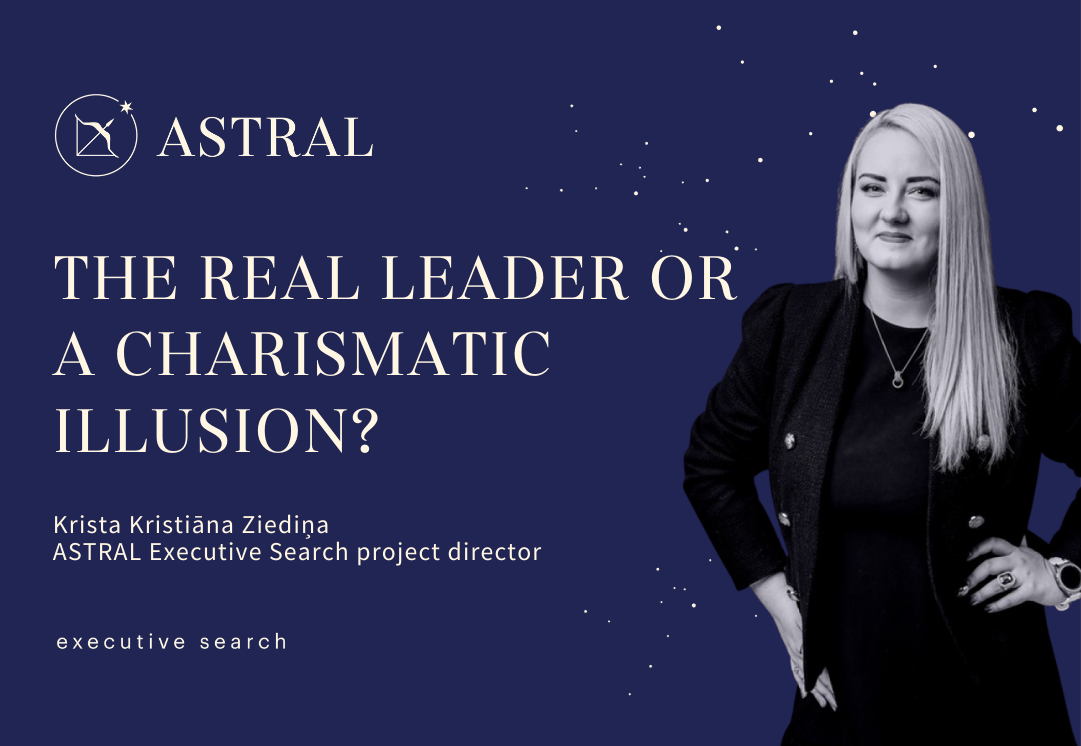
Nowadays, the executive selection process can increasingly resemble a complex performance, as candidates are well prepared, have mastered interview techniques, studied the “right” answers, consulted artificial intelligence, and learned to present themselves confidently, charismatically, and inspirationally.

However, a crucial question arises – does this confidence truly reflect the candidate’s authentic personality and leadership potential, or is it merely a professionally polished self-presentation image?

This topic becomes particularly significant in the selection of senior executives and experts, where a wrong choice can cost the organization dearly — financially, culturally, and reputationally.

Charisma as an advantage… and also a risk

Charisma is undoubtedly a powerful tool both in selection processes and in various business dealings. Charismatic leaders are able to inspire, persuade, and mobilize others. In selection interviews, such candidates often make a strong first impression — they speak fluently, demonstrate confidence, and create the feeling that “this is exactly the right person.”

However, psychological research and practical experience show that charisma is often confused with effectiveness. The ability to present oneself well does not necessarily mean the ability to consistently make sound decisions, manage complex situations, or build trustworthy long-term relationships with a team. In the selection process, this creates a significant risk — choosing not the best leader, but the best interview performer. It is important to recognize that every candidate wants to be seen in the best possible light — highlighting their strengths while downplaying or rationalizing weaknesses. At the executive level, this skill is usually highly developed.

In selection interviews, this may manifest as socially desirable responses, exaggerated or vague achievements, carefully controlled emotions and behavior, and avoidance of discussing previous failures or mistakes. As a result, evaluators involved in the selection process often see the candidate’s “public version” or outward personality, rather than the personality that will emerge in everyday situations as well as under pressure, conflict, or crisis.

How to distinguish a true leader from a charismatic illusion?

An authentic leader is not perfect. They are aware of their strengths and weaknesses, able to accept feedback, and capable of adjusting their behavior to a specific situation. Authenticity builds trust — and trust is the foundation of long-term leadership effectiveness. The challenge lies in the fact that authenticity is difficult to assess in traditional interviews. The higher the candidate’s level of self-presentation, the harder it becomes to distinguish genuine personality from a deliberately crafted image.

To reduce subjectivity and the influence of self-presentation, more and more organizations are using structured and scientifically grounded methods in leadership selection. Personality assessment plays a particularly important role, as it allows for a deeper look at what lies “beneath the surface.”

In my professional practice, I have experience with various assessment tools, yet none so far has surpassed the capabilities and results provided by Hogan Assessments. What is especially important to me is that the data obtained is not based on what a candidate wants to say about themselves, but rather on consistent psychological models. This makes it possible to identify a candidate’s natural behavioral patterns, understand how he or she responds under stress and pressure, anticipate potential risks in leadership style, and assess compatibility with the organization’s culture and team.

The assessment methodology of Hogan Assessments is specifically designed to minimize the effects of self-presentation. It focuses on personality traits that not only predict professional performance but also reveal everyday behavior and highlight “blind spots” that, if left unrecognized, may hinder effectiveness at work. As a result, organizations gain a much deeper understanding of the candidate — not only how he or she performs in an interview, but who they will be as a leader in the long term.

In the selection process, charisma may captivate — but only authenticity ensures sustainable leadership.

For organizations that aim to make strategically sound decisions, it is essential to look beyond the first impression and persuasive self-presentation.

The question is not whether a candidate can look like a leader. The question is who he or she will be when the bright lights fade and the real work begins.

That is where the true self is revealed.