Iluta Gaile, Board Member of ASTRAL Executive Search, met with Laura Pliča, Co-owner and Board Member of Landscape Construction, to discuss her journey from employment to building her own company, leadership, bold decision-making, and the responsibility that comes with leading and supporting the people around her.
How would you describe yourself and the organisation you currently work for?
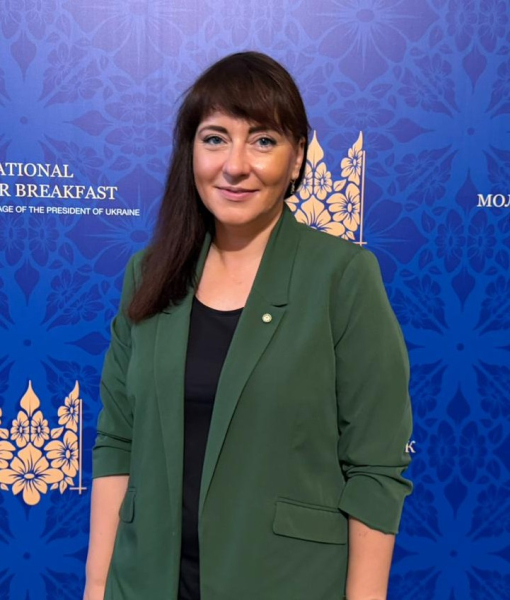
“Landscape Construction” is a landscaping and outdoor development company delivering projects of various scales. It is an incredibly dynamic company. We started during Covid, at a time of great uncertainty, and the war began the following year. These circumstances inevitably made us wonder whether things would work out in the long term and whether the company would be able to grow successfully. Yet, within five years, we have become one of Latvia’s leading landscaping and construction companies. I think the company is constantly evolving and, to some extent, reflects its owners – myself and Jānis Buķelis, with whom I founded the business. It reflects our desire to grow, innovate, learn something new and achieve more. Of course, every now and then we sit down and think about where we would like to be in ten years. But the company is developing at such a pace that sometimes it feels as though you are simply watching it all unfold from the sidelines.
We have a fantastic, hardworking and versatile team. We often compare it to the gears in a mechanism – everyone has their place, and when someone new joins, we find the right place for them too. Of course, sometimes someone does not fit in or does not want to, but overall, our team, our successes and our achievements largely reflect our desire to be good at what we do and to bring something meaningful and valuable into the world.
That is also how I would describe myself. My father has a saying: “There is no point in doing something if there is no meaning behind it.” I genuinely enjoy doing things that have purpose. When you can see the results of your work and feel proud of what you have accomplished, it gives you the energy to pursue the next achievement.
What motivated you to leave salaried employment and start your own business? When did you realise that you wanted to create something of your own?
To be completely honest, it happened by chance. It was never something I had planned in advance. I was employed at the time, and we had managed to accomplish many good things, but Covid brought significant changes to both people’s lives and the way businesses operated. A decision was made with the previous owner not to continue working together, various changes took place within the company, and as a result several people lost their jobs. My current business partner, Jānis Buķelis, likes to say that one day he and I found ourselves unemployed together. We had worked very well together, so we thought: let’s give it a try and see what happens. We had nothing to lose. As I have said in another interview, we were at zero. There was nothing left to lose, because you cannot lose zero. So we tried. And it worked.
How would you define a good leader today? Has your experience as an entrepreneur changed that definition?
I probably still have a long way to go before I can call myself a good leader, but I would at least like to be a decent one. In my view, an excellent leader first and foremost values their team and understands where the real value within a company comes from. A good leader is able to think several steps ahead, manage their time professionally, delegate and trust others. The ability to delegate and trust is something I am still working on myself. I am getting better at it, but I am certainly not perfect. In an ideal world, a good leader also listens to employees, notices potential difficulties or problems early enough, and helps resolve them. Of course, there are also things such as financial management and keeping track of the numbers – those should be fundamental skills for any good leader.
For me, the greatest challenge is being able to combine all of this: being the person who keeps an eye on the numbers and ensures the company is running properly, while still finding the time, energy and capacity to remain human.
How did you realise that landscaping and the development of public spaces was the field in which you wanted to build your own company?
That was another twist of fate. Before entering this industry, I had spent 17 years working in the automotive, machinery, insurance and banking sectors. During that time, I had worked on various complex international agreements, built partnerships and been involved in major projects. I was never someone who simply issued insurance policies – monotonous work and routine paperwork were never for me. I have always enjoyed coming up with new ideas, building partnerships and taking on more challenging projects. I was successful in that field as well, but eventually I began to feel that I had already accomplished a great deal. I started asking myself: can I surpass what I have already done, come up with something new and find my next challenge? Gradually, I realised that I wanted to make a change in my life.
I entered the landscaping industry almost by accident. I accepted an offer from my previous employer to try working in construction and landscaping, even though I knew virtually nothing about the field at first. He hired me as Executive Director, and we spent four excellent years working together and accomplishing a great deal. My first project was the “Mežaparks” Open-Air Stage, and it was an enormous challenge. I sometimes think that if I had fully understood what I was getting myself into, I might never have done it. But at the time, everything seemed exciting – I simply got involved and started working. I learned an incredible amount along the way. The project also had an outstanding management board member representing the general contractor, and I learned a great deal from her. We are still in touch today, and I consider her one of my mentors. It was during that project that I realised this work gave me a completely different kind of satisfaction. You arrive at a construction site and see a place that was a building site only yesterday gradually transform into a beautiful, well-designed and enjoyable environment. You can actually see the result of your work, and that creates a genuine sense of fulfilment. That was when I realised: yes, this is the kind of work that makes me happy. It was much harder to experience those kinds of positive emotions in insurance. You sell a client an insurance policy, and the next time they call you is usually when something has gone wrong. They do not call to tell you that something wonderful has happened. Here, it was the complete opposite. I realised that this was where I wanted to be. So when the opportunity later arose to establish my own company, I had no doubt that this was what I wanted to do.
Was starting your own business a carefully planned decision, or more of a courageous leap into the unknown?
It was definitely a leap into the unknown. I learned many things along the way, because no one is born an entrepreneur. Of course, some people grow up in family businesses and become involved in the company from an early age. They are gradually given responsibilities and, in a sense, are raised to become entrepreneurs. I have seen examples of this in my own life.
In my case, becoming a business owner was more the result of circumstances in which there were not many other options. But taking that step felt safer because I was not alone – there were two of us starting the company together. And, of course, you have to understand that everyone makes mistakes, myself included. The important thing is to acknowledge a mistake, correct it, analyse it and find a solution. I believe entrepreneurship is something you truly learn by doing. It is only once you are actually running a business that you begin to understand what it really involves.
What mistakes or assumptions about building a business proved to be wrong during the first few years?
I cannot really point to any disastrous mistakes. There was, however, one situation that caused us considerable concern. One of the partners for whom we worked as a subcontractor failed to pay substantial amounts owed to us for an extended period. We had several projects together, but the company itself had developed financial difficulties. It is now insolvent, and we ultimately managed to get through the situation, although it was extremely difficult. Unfortunately, this is one of the risks in construction that cannot always be anticipated. When we began working with this company, it was so stable that there was absolutely no reason to question its reputation. We had also worked very successfully with them for several years before that. I do not know whether I would call it a mistake. It was more a set of circumstances that we simply could not have predicted at the time. But we keep moving forward. Every year we improve and try to become better at managing different risks. One area where we can still improve is risk diversification, so that unexpected problems affecting a single partner cannot have such a significant impact on our company.
We certainly still have room to grow. I cannot identify one enormous mistake. As I have said in another interview, every day we wake up with an opportunity to be better than we were yesterday. Landscape Construction is no exception, and neither am I. I can always see something that could be done better. Of course, there have been smaller mistakes. For example, we bought a pickup truck that ultimately turned out not to suit our needs, so we had to sell it. But those are relatively minor things. Overall, I believe we are moving in the right direction – we simply have to keep improving.
How do you lead a company in an industry where mistakes can remain visible for years and affect thousands of people?
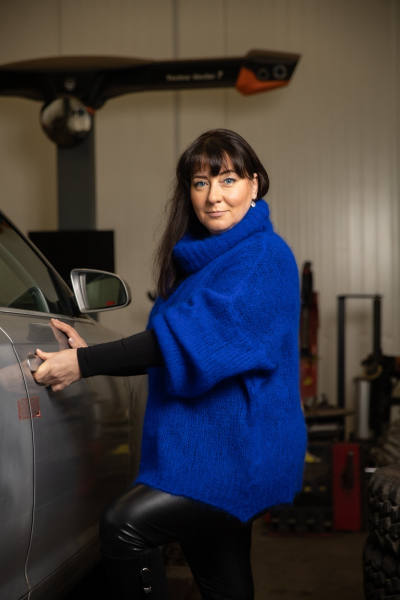
I would say that the biggest mistake we could make would be failing to value our employees. That has always been extremely important to me. Not everyone understands that, given the realities of our market, where public procurement is often driven by the lowest price, we cannot always reward our employees financially as generously as we would like. I would always like to pay them more, and I constantly think about how we can improve in this respect. Landscaping also relies on gardeners, and unfortunately gardening is not considered a particularly prestigious profession. Finding genuinely good employees who see this work as their calling is not easy. But we have the best of the best, and we continuously work to maintain that. You must never forget your team. It is very important to me that we share a common understanding, common values and a similar level of emotional intelligence. Mutual respect should go without saying. Jānis and I own the company in equal shares – exactly 50/50. When we established the company, many sceptics among both his friends and mine told us that this was a bad idea and that one person should own 51% so that someone would always have the deciding vote. We stood firmly by our decision. We have a shareholders’ agreement that sets out very clearly, step by step, what we would do if we ever had a serious disagreement and could no longer work together. In fact, I have not read that agreement again in five and a half years because we have never needed it.
One of the most important principles of our partnership is not even written down. When it comes to innovation, a major purchase or a significant step in the company’s development, we have agreed that we do nothing until both of us say yes. And neither of us takes offence if the other says no. If I want to introduce an innovation and Jānis has doubts, we do not proceed until I have convinced him. I accept and respect that. The same applies the other way around. I think this kind of unwritten agreement is incredibly important. I consider myself very fortunate to have the business partner I do.
Perhaps one of the most important things in our case was that day when we both lost our jobs. From the very beginning, we shared a history and something that united us – we were in the same boat. There has never been a situation where one of us had more, the other had less, or one was more important than the other. We both started from exactly the same point: zero.
How have the economic and geopolitical developments of recent years affected your company’s growth and your decisions about the future?
I now look at the longer-term future – ten years ahead, for example – with slightly more caution. Everything that has happened in recent years, from Covid to the war in Ukraine, has changed us in some way. Of course, I could talk about rising costs, how they affected contracts that had already been signed, and many other details, but those are challenges that can be overcome. That is business: either you know how to adapt to the situation and find a solution, or you do not. When it comes to our bigger plans and ambitions, however, we have always said openly that we want to be the biggest and the best. Perhaps that sounds like a bold slogan, but I genuinely always want to be the best. If we did not have that ambition, why would we be doing this at all?
I also want Landscape Construction to be a great place to work. I want our employees not to have to worry about the future, but to be able to work and feel stable and secure. That remains one of our goals. Naturally, everything happening in the world rocks the boat a little. There are things we can no longer afford to the same extent as before. For example, we spend more on fuel for our machinery, which means there is less money available for other things. But these experiences also make us stronger. Once you have made it through one set of waves, you are better able to anticipate what might happen the next time. Every experience makes us wiser.
I also remember the 2008 financial crisis very clearly. At the time, I was a young salaried employee, I had a very good salary, and everything seemed wonderful. I took out a mortgage, renovated the property, and it never even occurred to me that something could happen that would suddenly reduce my salary to a third of what it had been. But in that situation, it made sense – the market and the entire economy were collapsing. My employer simply could no longer afford to pay the same salaries as before. Today, I look at things differently. We always take into account that something unexpected could happen. We build reserves and try to be better prepared for different scenarios. You simply start thinking further ahead. Every experience like that makes you wiser.
What do people most often underestimate when they think about starting their own business?
I think many people believe: I can do everything myself. I am the smartest, the most capable and the hardest-working person, so I will handle everything on my own. I have seen that many times, and to some extent I have done the same myself. At first, you think: I will start on my own, grow the business, and then figure out what to do next. But you have to develop the ability to delegate.
I would compare it to an orchestra. There are many different instruments on stage, but imagine that you are the only musician. No matter how quickly you run from one instrument to another trying to play them all, the music will never sound right. At some point, you need another person, then another, and gradually you have to build a team. It was only last year that I found the courage to delegate more. I realised that by handing over some responsibilities and being willing to hire another person – someone who may not directly generate revenue but can take care of administrative tasks – I can use my own time as a leader to create greater value for the company. I think that is an extremely important lesson when building a business. At first, you have to accept that you personally may have less for a while and that everything you earn may need to be reinvested in the company’s development. But every task you delegate frees up your time and mental capacity to focus on things that create additional value for the business. Reporting is a good example. If I spend an entire day preparing a report and entering figures into an Excel spreadsheet one by one, that is a whole day during which I have to concentrate carefully to avoid making mistakes. If I can entrust that task to someone in the office, I can spend the same day winning the company’s next major project. That is something entrepreneurs need to understand: you should not save money at the expense of your team, but you do need to choose that team carefully.
You are actively involved in initiatives supporting Ukraine. What personally motivated you to get involved, and what has this experience taught you about people and leadership?
Leadership is not simply about being some kind of star – being in the spotlight, appearing in a magazine or being featured in an article. First and foremost, leadership comes with enormous responsibility. The moment you take on that role, you have to understand that there are many people looking to you and expecting you to make the right decisions, take the right steps and provide support.
I think it is incredibly important not to lose your human side. With a heavy workload, constant demands and an overwhelming amount of information, it is very easy for a leader to become exhausted or burn out and, somewhere along the way, lose that sense of humanity. Sometimes you do not even notice when it happens.
Looking back at 22 February, I had absolutely no intention of taking on a leadership role. I simply realised that something had to be done. What exactly needed to be done and why was not entirely clear to me at that point. But I knew that I could join the “Twitterkonvoja” team established by Reinis Pozņaks and help them continue the work they had already started by delivering vehicles to Ukraine. I volunteered as a driver for the second Twitter Convoy. Then came the third, fourth, fifth and sixth convoys, and with each one I became increasingly certain that I wanted to remain involved. I had no plan to lead anything or take on a leadership role – it simply happened. Much like my career, which I mentioned earlier, things gradually fell into place and developed naturally. I suppose I am the kind of person who, when I see that someone needs to take responsibility, thinks: if not me, then who? And so I step forward. That is how I have ended up where I am today.
I also strongly identify with the “Twitterkonvoja” initiative now. Reinis is still our leader, but he currently has less time to devote to it. We discussed this when he entered politics – while he is there, the rest of the team will have his back and we will keep things moving. Once I have taken something on, I keep carrying the flag. There are also people who rely on you, and you realise that you are responsible for them. It is the same at “Landscape Construction” – I feel responsible for our people, and I worry when they have concerns.
I am not always perfect. I do not always have enough time to talk to everyone, and sometimes I forget to thank someone. The same applies to the donors supporting “Twitterkonvoja”– I would like to thank each of them properly and write something more meaningful than simply “thank you”, but I do not always have the energy for everything. So when you pick up the flag of leadership, you have to understand that you are not simply a star. Leadership comes with enormous responsibility.
You received one of Latvia’s highest state honours – the Order of the Three Stars – for your contribution to supporting Ukraine. What does this recognition mean to you personally, and what were your first emotions when you learned that you were to receive it?
I will probably write an essay about this one day when I am old – provided I can still remember everything. It came as a complete surprise, completely out of the blue. I think it was a Sunday evening when Juris Poikāns, who was Latvia’s Ambassador to Poland at the time, was the first person to message me: “Laura, congratulations – well deserved!” I remember thinking: what is he congratulating me for on a Sunday evening? Then I received another message from my friend Ģirts: “Well done, Laura!” At least he had included a link to a news article announcing the recipients of the state honours. At that moment, I was genuinely shocked. I had absolutely no idea it was coming. I still feel that, in a sense, I received the Order of the Three Stars in advance. The success of “Twitterkonvoja” is not mine alone – there are an extraordinary number of people behind me and alongside me. Our entrepreneurs’ club and many others are part of it too. We do all of this together. It just happens that I am often the person holding the flag and therefore the one who is more visible. On my own, I have achieved nothing through “Twitterkonvoja”.
So I sometimes feel slightly over-credited, but at the same time it is an enormous honour. And, of course, it was an incredible boost to my confidence. It was not simply a step upwards – it felt more like taking off in a hot-air balloon. Perhaps the most meaningful recognition of all was seeing my parents’ reaction. They walked around proudly for a very long time afterwards.
Running a company, being actively involved in society and having a personal life – how do you find a balance between your professional and personal life?
To be completely honest, I do not always manage to find that balance. There are things I am good at and things I am not – not everything in life can be equally successful. My family life has changed as well – I got divorced two years ago. I am not sad about it. We are all adults, and sometimes life simply takes people in different directions.
These days, I am learning to devote more time to myself – certainly more than I used to. Every day I try to take a little better care of myself and pay more attention to my health. I am no longer 18, so I think more carefully about what I eat, how I feel and how physically active I am. I also look at the idea of balance differently now. I am learning to listen to myself more, take care of myself, and accept that not every area of life can always work out perfectly.
What helps you maintain your energy and motivation when it feels as though there are more challenges than solutions?
A pause. Just a short pause. Getting enough sleep and doing something nice for myself. Sometimes all I need is one day when I simply put everything aside. I have also learned to ask for help, although it does not come naturally to me. That ties in with delegation at work as well. You often think that no one can do a particular task better than you. Then all sorts of excuses come to mind: by the time I explain it and hand it over to someone else, I could have done it myself. I do not think I am unique in that respect. A lot of people probably feel the same way. So sometimes I simply stop for a moment, write down everything I need to do, and start breaking those tasks into smaller pieces. Gradually, I am also learning to identify who could help me with a particular issue and what I can take off my own shoulders. When you manage to hand a task over to someone else, there is an enormous sense of relief. You realise: I do not have to do everything myself. Other people can do it too. And sometimes they can even do it better, because you may have become too accustomed to your own routines and your usual way of looking at things.
Just as with supporting Ukraine, in business it is important to understand that you are not alone. A burden shared is a burden halved, and sharing the workload makes it lighter too. But a short pause always helps me find my energy again.
Is there a life lesson or belief that has helped you both in business and outside of it?
This is something I do in my everyday life: when I leave home in the morning, I say, “God, show me what I can do in Your name today.” I have seen many times that things happen in my life that I may not understand at the time. There have been moments when something happened and I was deeply upset – there were tears and bitterness. At the time, you think: why is this happening? But later, you look back and realise that it was actually the best thing that could have happened to you. I believe that someone is guiding me. That is why every time I leave home, I say to God: “Here I am. Use me.”
I remember one situation when we had just started “Landscape Construction”. The company was not yet registered for VAT, so I submitted an application, but it was rejected with a long list of questions that we had to answer. I genuinely did not have answers to many of them because the company was essentially starting from zero. I put it off until the very last evening when I could still appeal the decision and submit our explanation. I remember sitting down in front of a blank page at around nine in the evening and simply having no idea what to write. At that moment I thought: “God, please put an idea into my head so that I can answer them and resolve this situation.” And I simply started writing. I went through every question and gradually formulated an answer to each one. For example, the Latvian State Revenue Service asked for a bank statement and an explanation of how we planned to finance the company’s operations. There was nothing in the account to show them because the company had only just started operating. So I wrote: here is the bank statement, but I intend to grow this company, and that is precisely why I need your support now so that, in the future, there will be something in this account to show you. At some point, the ideas simply started flowing, and I wrote everything down. Two days later, the application was approved. I remember walking home from my car that evening and feeling as though I was floating a centimetre above the ground with happiness. When I first sat down in front of that blank page, I had absolutely nothing in my head.
So the lesson I carry through life is to trust that God is guiding me and helping things fall into place. Of course, there will always be obstacles along the way, but what matters most to me is doing things sincerely and with a pure heart. Then things have a way of working out.
If an employee came to you today and said, “I want to start my own business,” what would you advise them to understand before taking the first step?
The first thing would probably be to understand the world of accounting and finance – how a company generates revenue, what its costs are, and how all the different pieces fit together. A lot of people think: I will do some work, money will appear in my bank account, and that money is mine. No taxes, no need for accounting, no need for anyone to help me – I will just go to an ATM, withdraw the money, and that is it. I genuinely know adults who think that way.
So I would definitely recommend understanding the fundamentals of accounting first. Although, to be honest, I am not sure that a single accounting course would be enough. I think you only truly begin to understand these things by doing them. I myself only came to fully understand some of them relatively recently. You need to understand how costs actually work. You have direct costs, employee salaries and taxes, and all of that contributes to the amount you need to charge your client. But it does not end there. You have an office, and even an office has seemingly trivial things such as toilet paper and a coffee machine. Someone has to pay for all of it. That is why financial literacy is incredibly important.
I have seen entrepreneurs get themselves into trouble because they simply do not know how to calculate their costs properly. They think: I will do the work, collect the money, and that is the end of it. But managing a company’s finances is a skill in itself. I am not saying that I have mastered all of it perfectly, but the years I have spent in this industry, as well as the mistakes I have made myself, have taught me a great deal. Financial literacy is something every entrepreneur needs to develop. You cannot think that money simply comes out of an ATM.