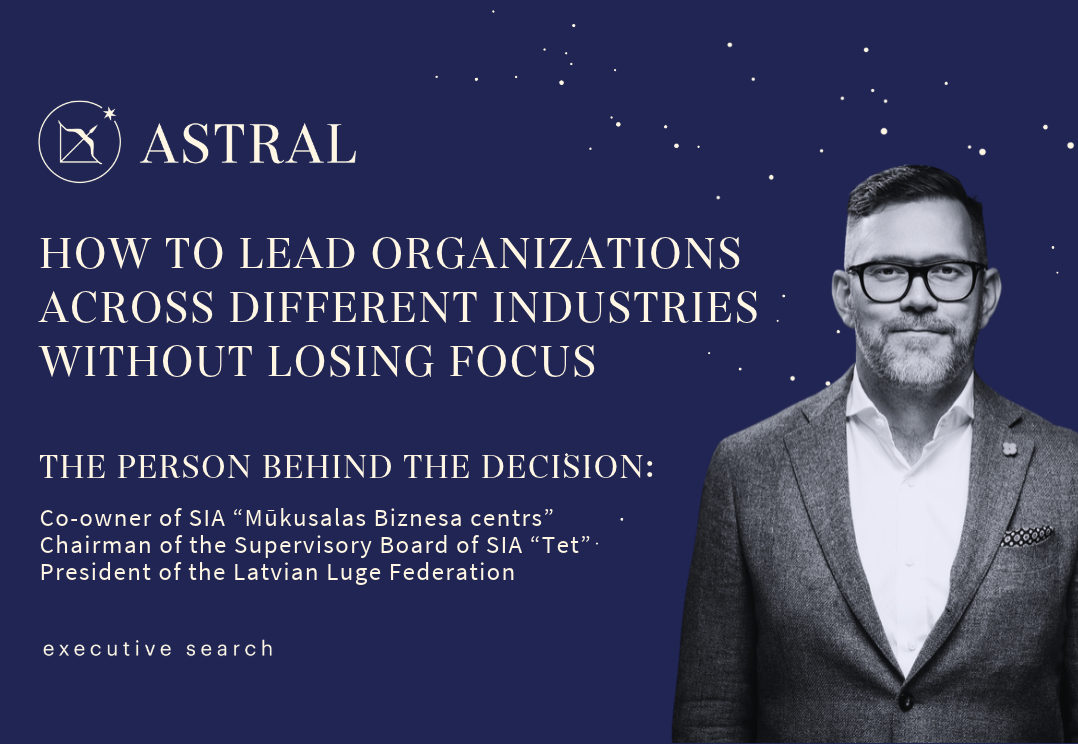
Iluta Gaile, Member of the Board at ASTRAL Executive Search, met with Klāvs Vasks, co-owner of MŪKU SALA, Chairman of the Supervisory Board at Tet, and President of the Latvian Luge Federation (LKSF), to discuss leadership experience across different industries, strategic decision-making, the importance of teamwork, and the common ground between business and professional sports.
Leadership Experience, Values, and Working Across Different Industries
How would you describe yourself and the organizations you are currently involved with?
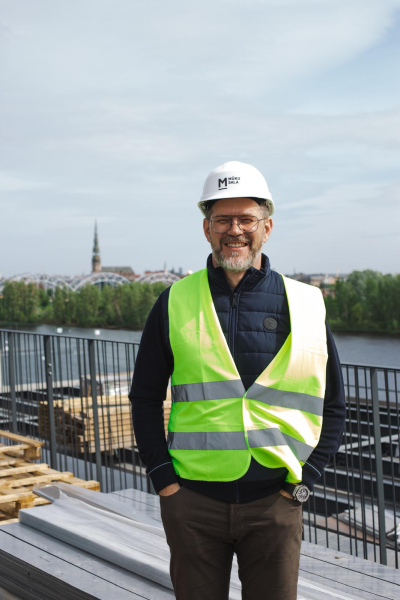
I have always believed in embracing challenges and working in industries and fields that I find genuinely interesting and exciting. My interests are wide-ranging, from real estate development, including office buildings, residential properties, and student accommodation projects, to corporate governance in state-owned enterprises, such as my role as Chairman of the Supervisory Board at Tet. Alongside this, I am actively involved in the non-profit sector through my work with the Latvian Luge Federation. When you enjoy what you do, you can find something inspiring and personally rewarding in each of these areas.
Ever since childhood, I have been curious about learning new things, creating, building, transforming, and organizing. I have never limited myself to just one narrow field of interest. Instead, I have always tried to look at the bigger picture. Perhaps this also comes from my love of reading books as a child. I was a big dreamer and thinker.
Over the years, I have come to realize how important it is to first imagine and visualize your ambitions and major projects. When you have a clear picture of what you want to achieve, turning that vision into reality becomes much easier. Essentially, you channel your energy and efforts towards a specific goal and outcome. Of course, there will be setbacks along the way, but what matters most is getting back up and continuing to move forward.
How has your understanding of what makes a good leader evolved over the years? Are there any qualities you value more today than you did at the beginning of your career?
We learn a great deal about leadership from the people around us. Throughout my career, I have worked with different managers and learned valuable lessons from each of them. Of course, my own personality and the idealism of youth have also influenced the way I have led people as I gradually progressed in my career. Looking back at the beginning of my career today, I realize there are many things I would have done differently.
Over the years, I have learned to take a closer look at situations and make an effort to understand problems before making decisions. I have always appreciated people who take initiative, are enthusiastic, genuinely enjoy their work, and look for solutions rather than reasons why something cannot be done. I value these qualities highly and am always willing to build long-term working relationships with people who share this mindset.
In my opinion, our culture still places too little emphasis on positive feedback. We do not praise employees often enough or simply thank them for a job well done. Earlier in my career, I was not always good at this either. Now, with more experience, I make a conscious effort to communicate more openly with people, discussing both what has gone well and what could be improved.
For me, shared values and mutual understanding within a team are essential. I have worked with many people for five, ten, or even more years. They are not just colleagues with whom I achieve professional goals. They are people whose company I genuinely enjoy and with whom I value working together.
Of course, I made mistakes early in my career. I was not always patient enough, nor was I always good at listening to others. Nevertheless, my colleagues and I shared some truly great experiences during those years, and I hope they also look back on our time working together with fond memories.
Throughout your professional career, you have held leadership positions in a wide range of organizations. You have served as Chairman of the Supervisory Board at Citadele Bank and airBaltic, and you are currently Chairman of the Supervisory Board at Tet, co-owner and investor in MŪKU SALA, and President of the Latvian Luge Federation. In your opinion, what does it take to succeed across such different industries and fields? Which leadership skills are essential, regardless of the industry or sector?
First and foremost, you need to have the energy and drive to achieve something. If you come to work or take on a new project without really understanding why you are doing it, you are unlikely to achieve meaningful results. Personally, I have always enjoyed learning and exploring new things in depth. I try to understand as quickly as possible how a particular industry or organization operates, how its processes are structured, what they involve, and what ultimately drives the results.
Equally important is the ability to bring the right people together and build a strong team. Every industry requires professionals who understand their area of expertise even better than you do. My experience as a leader, investor, and developer has taught me to stay focused on goals and results. A leader’s role is to build a team and bring together the resources needed to achieve those goals, rather than trying to make every decision alone.
I believe these principles apply regardless of the industry, company, or project you are involved in. One of the keys to success is understanding which people and resources are needed to achieve the desired outcome. This includes not only team members, but also business partners, allies, and other stakeholders whose contributions help turn ideas into reality.
At the same time, it is important to keep an open mind, remain willing to learn, and listen to others. You also need to be able to accept criticism and learn from setbacks. What matters most is drawing the right lessons from these experiences so that you can make better decisions in the future and continue moving forward.
You are involved in several organizations at the same time. How do you set your priorities and decide where to focus your time and attention at any given moment?
Not all projects are at the same stage of development at any given time. There are periods when one project requires more attention and active involvement, while another may be in the research or implementation phase, where my day-to-day presence is less essential. As a result, the busiest periods of different projects do not always overlap, which makes it easier to manage my time and attention.
In my view, entrepreneurship is not a nine-to-five job. When you are an entrepreneur, you are involved in various matters from the moment you wake up in the morning until the evening. Sometimes that means working longer hours or even on weekends. That is why I try to manage my own schedule, identify where my involvement is genuinely needed, and trust my team to handle the rest.
If I ever feel that I am struggling to keep up with everything, I try to identify where the problem lies and what is creating the greatest workload. From there, it is about finding solutions – whether that means delegating certain responsibilities, restructuring processes, or changing the way work is organized. So far, I have managed to navigate these more demanding periods and organize my work in a way that allows me to continue being effectively involved in several projects at the same time.
Leadership Challenges, Strategic Decision-Making, and Responsibility
There is currently a great deal of discussion about the future of Tet and LMT, including a potential merger and changes in ownership. How do you maintain a clear strategic direction for a company and make long-term decisions in such uncertain circumstances?
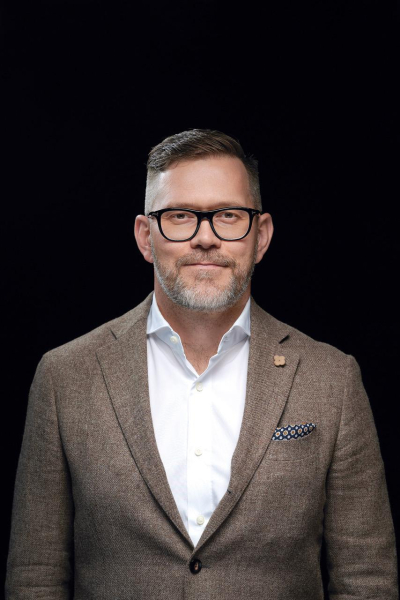
The telecommunications industry is undergoing significant changes, both globally and in Latvia. New technologies are emerging, customer habits are evolving, and the competitive landscape is changing as a result. Latvia may be one of the few European countries where the largest mobile and fixed-line telecommunications providers have yet to be brought together under one company.
In our case, we are talking about two companies in which the state holds ownership stakes, and for more than a decade, there was insufficient political support to bring them together. Now, the process is finally moving forward, and I hope it will allow us to fully realize the business opportunities and benefits that closer cooperation between the two companies could bring. At the same time, technological development does not stand still. New solutions are entering the market, such as Starlink, which will likely have an impact on the mobile telecommunications market in the future and create new competitive dynamics.
When it comes to long-term decision-making, our responsibility is to continue developing the company in a way that preserves its strategic and economic value, regardless of the uncertainty surrounding its future ownership. We cannot simply wait for all these questions to resolve themselves, so we focus on projects and areas of development that we can pursue today.
The first major area of focus is infrastructure and IT, including the expansion of our fibre-optic network, data centre development, IT services, and cybersecurity. At the same time, we are developing a range of services for businesses and individual customers that provide additional value beyond a fixed broadband connection. Fixed-line internet has its advantages, including greater resilience to certain types of network disruption, although fixed and mobile technologies are, of course, closely interconnected.
Another important area of our business is entertainment and television. Tet has been active in this field for more than a decade and continues to develop its television platform. However, Latvia is a relatively small market, which means we also need to explore opportunities to reach customers beyond our borders. One potential direction is to offer our television platform technology in other markets. This would allow us to expand our customer base while distributing the costs of developing and maintaining the platform more efficiently.
Have you ever made a decision in your career that was initially unpopular but later proved to be the right one? What helped you stand by that decision?
I believe the most difficult decisions are often related to managing people, particularly in situations where replacing a senior leader may be necessary to support the company’s future growth and development.
There is often a feeling that someone is a good person who simply needs another chance or more time. However, that approach does not always work. When you are a CEO, Chairman of the Supervisory Board, or business owner, there comes a point when you have to make a decision: do you see this person as part of the company’s future development and growth?
I think the greatest concern in such situations is the potential impact that replacing key leaders may have on the organization. However, my experience has shown that, in most cases, these decisions have ultimately proved to be the right ones.
Whether by bringing in new people or moving existing leaders into different roles, a company can benefit from fresh perspectives and ideas. I believe it is worth considering rotating senior executives between different functions every five to seven years. This brings new experience and ways of thinking into the organization, ultimately contributing to its continued development.
You have extensive experience serving on company supervisory boards. What are the most common mistakes that even experienced leaders make? What do you think they should do differently?
I believe one of the most common mistakes is continuing to invest money in projects in the hope that they will eventually start delivering results. To some extent, you become attached to the belief that things will somehow work themselves out. And the more money you have already invested, the harder it becomes to make a significant change. You start thinking that just a little more investment might finally make the project successful.
I think this is a fairly common problem. Leaders often find it difficult to say “no” and walk away from projects that have already consumed significant amounts of time, effort, and money. I have observed this while working with different companies across the Baltics. Almost every company has a project or business area where problems gradually build up and grow, much like a snowball. At some point, a leader needs to have the courage to say: enough is enough, we need to stop this. Of course, that may mean accepting financial losses or other difficult consequences, but sometimes it is better to make a painful decision early rather than allow the problem to grow even bigger.
At the same time, it is important not to go to the opposite extreme and become so cautious that you are no longer willing to pursue anything new. If you evaluate every idea solely in terms of potential risks and losses, you might miss the company’s next major growth opportunity or even a potential unicorn.
That is why I believe it is essential to assess whether a particular project has the necessary expertise, resources, and team to succeed. Just as in people management, project management requires the ability to make difficult decisions at the right time: knowing when it is worth continuing to invest, when it is better to stop, change direction, or start again.
You have personally participated as a candidate in selection processes for supervisory board positions at state-owned companies. In your opinion, is there anything that could be improved or changed in these recruitment processes? If so, what would you suggest?
My experience so far has shown that, in the selection processes for leadership positions at state-owned companies, many decisions are based on Excel spreadsheets and scoring systems. Of course, I understand that it is not easy to objectively compare a large number of candidates, assess their skills and abilities, and measure them against the specific needs of a company. However, I believe that, as in the private sector, much greater emphasis should be placed on candidates’ actual experience and achievements. It is important to understand what a person has genuinely accomplished throughout their professional career – what projects they have delivered, what changes they have led, and what results they have achieved.
I believe that every selection process of this kind should have a clearly designated person responsible for it – someone who does more than simply participate as a formality and who can clearly define what kind of leader the company actually needs. In the case of state-owned companies, this could, for example, be a representative of the leadership of the relevant ministry.
I would like to see greater emphasis on evaluating candidates’ experience and capabilities in the context of the specific company. In other words, how much value could this person bring to the organization? How could their previous experience help address its current challenges and achieve its future goals? The focus should not simply be on how many points a candidate earns for formally meeting certain criteria. Ultimately, what also matters is whether they are the right person to lead the company through its next stage of development.
In my view, the state shareholder representative should be more actively involved from the very beginning of the selection process, clearly communicating to the selection committee what kind of candidate is being sought, which competencies and experience are required, and, most importantly, what results are expected from this person as a member of the company’s management or supervisory board.
A scoring system can help compare candidates, but it should never overshadow the most important question: which candidate can make the greatest contribution to the company?
Sports, Personal Experiences, and Life Lessons
Alongside your business activities, you also serve as President of the Latvian Luge Federation. How did your involvement in luge begin, and what motivates you to continue contributing to the sport's development?
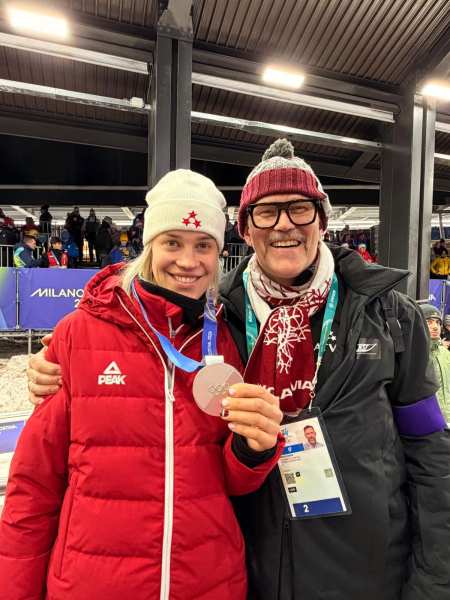
My connection with luge began in 1988, when I enrolled at Murjāņi Sports Boarding School to train in luge. I was a boy from the countryside who wanted to take up what was, at the time, a rather unusual sport. I have to say that attending a sports boarding school during the Soviet era was a real school of survival. I won’t hide the fact that my first year, when I was just 13, was emotionally very difficult. But as the saying goes, what doesn’t kill you makes you stronger. Of the more than 25 young people who started school alongside me in 1988, I was the only one left by the time we graduated in 1993. It was a life-changing experience that toughened me both physically and emotionally and helped shape my character.
By the time I graduated from Murjāņi Sports Boarding School, I had realized that while sport was a wonderful pursuit, I was unlikely to be able to make a living from it. During my final years of secondary school, I had already decided to pursue a career in finance. At that time, the first banks were beginning to emerge in Latvia, along with new educational opportunities, including the Banking College, the predecessor of what later became the BA School of Business and Finance. I set myself the goal of studying there. My career as a luge athlete came to an end in 1993, following the World Junior Championships in Sigulda. I graduated from secondary school and moved to Riga to study. That marked the beginning of the next chapter of my life.
I returned to luge almost six years ago, when the previous President of the Latvian Luge Federation decided to step down and the federation began looking for people who could bring fresh perspectives and ideas to its work. Several other new members joined the federation’s board alongside me. You could say it was a generational change in the federation’s leadership.
I believe we have successfully built on the work of our predecessors, and Latvian luge continues to add to our country’s Olympic medal collection. We achieved this once again at the Milan–Cortina Olympic Games, where Elīna Ieva Bota won a silver medal, something that makes me very proud. Of course, being the perfectionist that I am, I would have liked to see a couple more medals. But it is important to appreciate what has already been achieved while continuing to strive for new successes.
What motivated me to get involved was the fact that luge has always been close to my heart. I also saw how much it meant to the people who support and develop the sport. For me, the team is incredibly important – people who genuinely care, who want to achieve results, and who are willing to invest their energy in a shared goal.
When I am surrounded by people like that, I am equally motivated to contribute, offer my support, and celebrate our achievements together. Of course, things do not always go according to plan. There are challenges to overcome, solutions to find, and improvements to consider, whether in teamwork, equipment, or athlete preparation.
But it is precisely this shared effort, overcoming challenges together, and the joy of achieving success that gives me such a strong sense of satisfaction. For me, luge is a constant source of positive energy and emotions.
How does leading a sports organization differ from leading a business? Is there anything about managing a sports organization that has turned out to be more challenging than you initially expected?
I believe the main difference is that in business, there is a clearer hierarchy and more clearly defined employer–employee relationships. In a company, greater emphasis is placed on completing specific tasks and achieving established goals. In a sports organization, these boundaries are often less defined, as sport is not the only commitment for many athletes and others involved. They also have other responsibilities in their daily lives, so a leader needs to understand what motivates each individual and encourage them to remain involved. It is important that people genuinely want to dedicate their time and energy to developing luge, are willing to contribute, and are committed to working towards a shared goal.
Of course, having a motivated team is essential in business as well, but leading a non-profit organization requires a somewhat different approach. Formal authority alone is not enough to inspire people to follow your vision. Much greater emphasis needs to be placed on listening to others, agreeing on a common direction, and building consensus before decisions are made and put into action.
In your opinion, what do a successful sports federation and a successful business have in common? Is there a particular principle or approach you have learned from sport and applied in business?
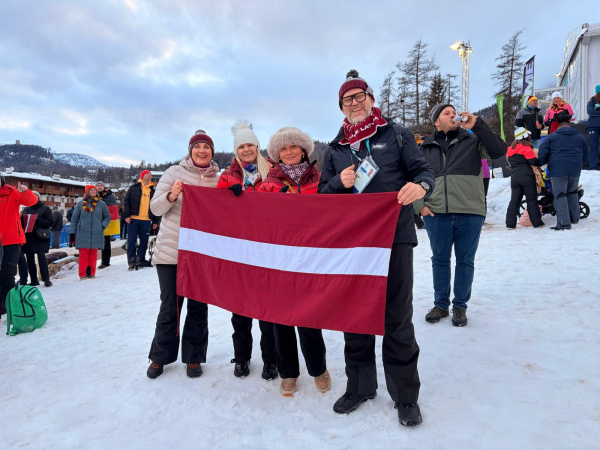
I believe there are many similarities between sport and business. In sport, you strive for the best possible results and medals, while in business, you aim to develop new projects, explore new areas of activity, and achieve your goals. In both cases, the team plays a crucial role, as does the way work is organized to achieve the desired results.
One of the most important lessons I have taken from sport is an even deeper appreciation of the importance of teamwork. I have learned to listen more carefully to others, seek common ground, and value different perspectives. This is extremely useful in business as well, because leaders and business owners sometimes tend to hold too firmly to the belief that their own opinion is the right one. But that is not always the case. By involving more people and listening to different points of view, you can often arrive at better-informed and more balanced decisions.
At the same time, both sport and business require a strong focus on goals and results. However, success is measured somewhat differently in each field. In sport, the outcome is very clear – you either finish first or you don’t. In business, things are more complex. Of course, one of the main objectives is to generate profit, but many other players in the market are striving for the same thing.
Moreover, business success cannot be measured by a single good year. You want to build a company that continues to grow and remains stable ten years from now. That is why you constantly need to think about the future – what can be improved, which new opportunities can be explored, and how the company needs to evolve with the times to remain competitive and continue growing.
A new Olympic cycle has begun. What would you like to see Latvian luge achieve over the next four years? What would give you the greatest sense of satisfaction?
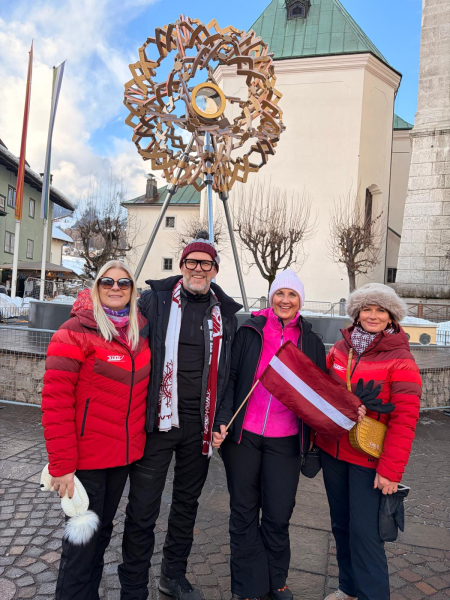
I would certainly be delighted if we managed to win at least one Olympic medal, or even several. Equally important to me is ensuring that the Sigulda track remains in Latvia and that we continue to nurture a new generation of luge athletes who will carry the sport forward.
In recent years, we have seen a real surge in interest in luge among children. Our youth sports school is currently operating at full capacity – all available training time on the track is fully booked, making it difficult to accommodate more young athletes. I hope that the investments we have made in developing youth luge over the past four or five years will pay off in the future. Perhaps as early as the next Winter Olympics in the French Alps, we will see new faces emerging who are capable of competing for Olympic medals.
For me, the greatest satisfaction would be to look back in four years and see that Latvia has developed a strong new generation of luge athletes and established a system that ensures continuity. I want us not only to celebrate today’s achievements but also to see young athletes coming through who have the potential to build on those successes in the years ahead.
Has there been a particular event or experience in your professional life that significantly changed the way you think or approach your work and responsibilities?
One of the most important lessons in my life came from my time working in banking. There were situations where the effort, energy, and ambition I put into my work were not always appreciated or were sometimes misunderstood. Things did not always turn out the way I had hoped, and at the time, it was a difficult but valuable lesson. I realized that when you work for a large corporation, you can dedicate all your time and energy to your job and be completely loyal to the company, but that does not guarantee that one day you won’t find yourself without a job and having to start all over again.
This experience taught me to look at work and my professional career from a broader perspective. Regardless of the company you work for or the position you hold, it is important to use that time to gain new knowledge, develop your skills, and broaden your horizons.
Equally important is building relationships with people – clients, business partners, colleagues, and suppliers. I believe in being approachable and helping others without expecting anything in return. If you ever need to change jobs or start something new, those relationships and your reputation can prove incredibly valuable. People who know your work ethic and have seen what you are capable of are much more likely to offer you new opportunities for collaboration.
I experienced this myself after leaving the banking sector. I was able to pursue many new business ideas and projects together with people I had already met during my time in banking. They knew me, understood my way of working, and were familiar with my attitude towards work, which made it much easier to gain their support for new ideas.
They trusted that I would be able to see a project through from start to finish. And even if something did not work out, they knew it would not be because I had failed to give it my best effort.
Perhaps that is one of the most valuable lessons I took away from my banking career – professional success is not only about the results you achieve, but also about the relationships you build and the trust you earn along the way.
What helps you switch off from your professional responsibilities and recharge? Do you ever manage to completely disconnect from work?
In the summer, it is definitely sailing. I am a skipper myself, and I have a racing yacht that I sail with my crew in regattas across Latvia and the Baltics. When you are out at sea, there is often no mobile signal, and your phone is tucked away somewhere deep in your bag. In those moments, it is just you, your crew, the weather conditions, your competitors, and the course ahead. Nothing else seems quite as important, and you can focus entirely on what is happening on the water. For me, it is the best way to disconnect from everyday life and, as I like to say, reboot my hard drive.
Of course, physical activity also helps a great deal. I particularly enjoy exercising on weekday mornings, when I can get up and spend 30 to 40 minutes moving and preparing my body for the day ahead. Over the past two or three years, this has become something of a ritual for me. I have noticed that I feel much more active and energetic after exercising.
As the years go by, I have also come to appreciate more and more how important it is to keep my body strong and flexible. I believe regular physical activity is one of the best ways to maintain energy and well-being, even with the demands of a busy professional life.
If you had to name one guiding principle that has shaped your professional life and helped you make the right decisions, what would it be?
I believe the most important thing is to work with like-minded people – those who are energetic, who do not give up when faced with the first challenges, and who find meaning in what they do. A strong team, shared values, and mutual trust are the foundation for achieving what you set out to accomplish.
I would compare it to a family. In a family, too, it is important that people understand and respect one another and are able to work together. When there is mutual understanding and respect, the results of your shared efforts become much more meaningful – whether we are talking about building a family, raising children, or growing a business.
This is a principle that has always motivated me and helped me move forward. I believe you should not waste your time in an environment dominated by negativity. However, that does not mean everyone on the team should always agree with me. What matters far more is surrounding yourself with people who help you grow and develop, and whose growth and development you can contribute to in return.