Organizational culture, employee engagement, trust, and leadership have become some of the most important topics in today’s workplace. Rapid changes in the labour market, rising employee expectations, and the need to remain competitive are encouraging organizations to focus not only on processes and performance, but also on the people behind them.
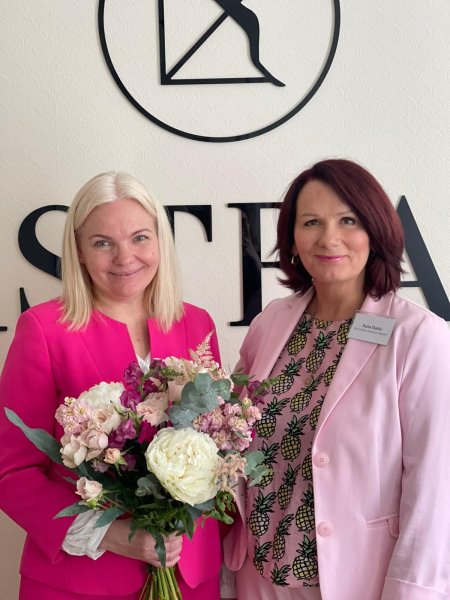 To encourage knowledge sharing and strengthen the HR community, ASTRAL Executive Search hosted another HR Experience Stories Morning, bringing together HR professionals and business leaders to exchange practical insights and real-life experiences in people management. This time, Julia Žurēviča shared lessons from more than 25 years of experience in human resources, speaking about relationships, trust, values, and boundaries topics that often have a greater impact on organizational success than any process or system.
Trust Is Not a Status - It Is an Ongoing Process
One of the key takeaways from the seminar was that trust within an organization is not built overnight. It is not something that simply exists or does not exist. Trust develops gradually through everyday interactions, decision-making, communication, and the ability to consistently follow through on commitments.
Organizations often look for complex solutions to improve employee engagement and motivation. In reality, however, the greatest impact often comes from seemingly simple things: whether people feel heard, whether their questions receive meaningful answers, whether leaders act consistently, and whether employees feel safe expressing their opinions.
Experience shows that employees quickly recognize the difference between being genuinely listened to and merely being politely acknowledged. It is in these everyday moments that trust is either strengthened or gradually lost.
Values Gain Meaning Only When Reflected in Actions
Many organizations have clearly defined values, yet these values do not always become part of everyday workplace practice. One of the key messages of the seminar was that values cannot exist solely in presentations, on company websites, or displayed on office walls.
For values to truly shape an organization’s culture, they must be reflected in everyday behaviours and actions. Collaboration, for example, is more than just an aspirational word – it is demonstrated through knowledge sharing, mutual support, respectful communication, and a willingness to help colleagues achieve common goals.
Consistency is equally important. When an organization promotes values such as respect, accountability, or collaboration, but tolerates behaviour that contradicts them, trust can quickly erode. This is why the role of HR extends beyond defining organizational values. HR professionals play a critical role in embedding those values into recruitment practices, performance management, development initiatives, and the day-to-day actions of leaders.
Relationships Remain One of HR’s Most Powerful Tools
When discussing HR, the focus often falls on systems, procedures, and processes. However, one of the recurring themes throughout the seminar was that, in the long run, relationships have the greatest impact.
HR professionals work with a wide range of stakeholders every day employees, leaders, candidates, teams, and external partners. While each group requires a different approach, trust remains the foundation of every successful interaction.
In many cases, simple acts of genuine interest in people can have a greater impact than large-scale initiatives. Regular conversations, meaningful feedback, timely communication, and showing concern for an employee’s well – being during challenging times can make a significant difference.
These small, everyday actions are what ultimately shape an organization’s culture and help create an environment where people feel valued, respected, and supported.
Candidates Choose Not Only the Company, but Also the Leader
During the seminar, ASTRAL Executive Search also shared several insights gained from its experience in recruiting leaders and senior – level professionals.
One of the key takeaways was that candidates evaluate not only the company, but also the leader they will be working with. Throughout the interview process, candidates quickly form an impression of whether the organization has a clear vision, whether its leaders are capable of making decisions, and whether the company genuinely understands the profile of the person it is seeking.
In many cases, candidates choose to join a particular leader rather than the organization as a whole. As a result, a leader’s reputation, communication style, and ability to build trust have become increasingly important factors in attracting and retaining top talent.
It was also emphasized that the candidate experience begins with the very first interaction – whether it is a LinkedIn message, a phone call, or a job description. The recruitment process serves as a reflection of an organization’s culture and can have a lasting impact on its employer brand and reputation.
The Perfect Match Is Not Always the Best Choice
In recruitment, organizations often focus on candidates with identical experience, similar career paths, or industry-specific expertise. However, experience increasingly shows that candidates with more diverse backgrounds can bring fresh perspectives, ask better questions, and drive meaningful change.
Experience tells us what a person has already accomplished. Potential, on the other hand, reveals what they may be capable of achieving in the future.
This is why successful recruitment goes far beyond reviewing a CV. It requires the ability to recognize a person’s motivation, mindset, values, and capacity for growth and development.
HR and Leadership Partnership Is Essential for Organizational Success
Today, HR is increasingly viewed as a strategic business partner. However, true partnership cannot be created through formal structures alone – it develops when HR professionals and leaders work together toward shared goals.
Leaders have the greatest influence on an employee’s day-to-day experience, while HR brings valuable insight into people-related risks, opportunities, and the broader impact of workforce decisions on business performance. In the strongest organizations, both parties share responsibility for team results, organizational culture, and employee development.
This partnership becomes especially important during challenging situations – periods of change, organizational restructuring, workplace conflicts, or performance-related issues. It is in these moments that the strength of trust, collaboration, and alignment between HR and leadership is truly tested and demonstrated.
Clear Boundaries Support Long-Term Sustainability
In Conclusion
The HR Experience Stories Morning once again highlighted that successful people management does not begin with complex systems or processes, but with relationships, trust, and consistent actions.
While technology, artificial intelligence, and a growing range of HR tools continue to evolve, people remain at the heart of every successful organization. This is why the ability to listen, build trust, bring values to life, and foster meaningful collaboration over the long term is becoming one of the most important competencies for both HR professionals and leaders.